It’s tempting. You’ve run out of dog-safe shampoo, your pup smells like they rolled in something questionable, and there’s a bottle of your own shampoo sitting right there in the shower. Why not just use that?
Here’s why you shouldn’t — and what to use instead.
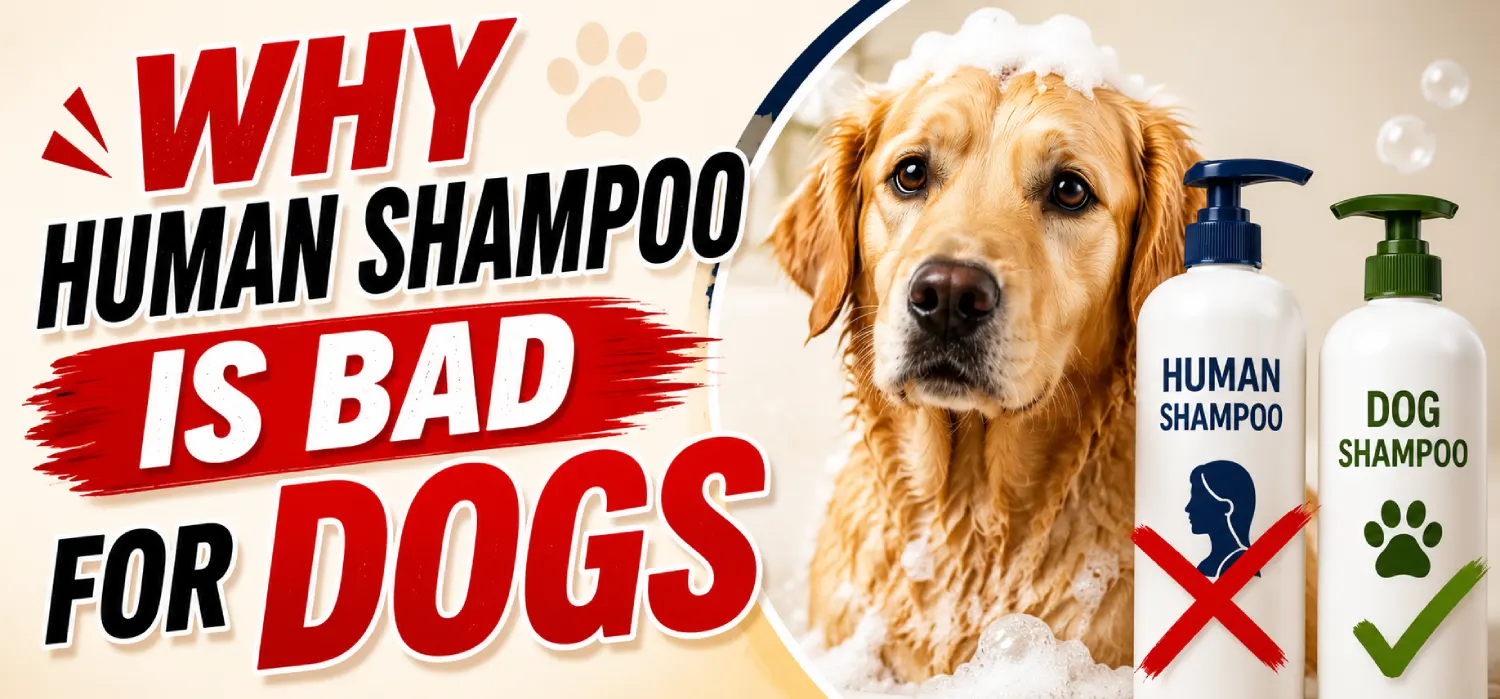
Human skin has a pH of around 5.5, which is slightly acidic. Dog skin sits closer to a neutral 6.2–7.5, depending on the breed. Human shampoos are formulated to match our skin’s acidity, so when you use one on a dog, it disrupts their skin’s natural pH balance.
This disruption weakens the skin’s protective barrier, making it easier for bacteria, yeast, and parasites to move in. Over time, this can lead to dryness, irritation, and infections that are far more annoying (and expensive) to treat than the mud your dog rolled in.
Dogs also have far fewer oil-producing sebaceous glands than humans, and their coats depend heavily on the oils those glands do produce. Human shampoo is designed to cut through the extra oil our hair and scalp generate. On a dog, it strips away oils they can’t afford to lose, leaving skin dry, flaky, and prone to itching.
Many human shampoos, especially scented or medicated ones, contain fragrances, sulfates, and essential oils like tea tree oil that can be irritating or even toxic to dogs. Dogs also groom themselves with their tongues, so anything left on their coat is likely to end up ingested. Ingredients that are perfectly safe for us can cause vomiting, drooling, or worse in dogs.
Dog owners who use human shampoo often notice their dog scratching more, not less, within a day or two. The itching leads to more scratching and licking, which further damages the skin barrier — a cycle that’s hard to break without a proper vet-approved treatment plan.
Always reach for a shampoo formulated specifically for dogs. These are pH-balanced for canine skin, free of ingredients that are unsafe if licked, and gentler on natural coat oils. If your dog has sensitive skin, allergies, or a specific coat type, look for a shampoo made for that need — oatmeal-based for itchy skin, medicated for skin conditions, or puppy-safe formulas for younger dogs.
At ForMyBuddy, we always steer pet parents toward dog-specific formulas for exactly this reason — your dog’s skin deserves better than a one-size-fits-all human product. A good rule of thumb: if the label doesn’t say it’s made for dogs, it doesn’t belong on your dog.
Baby shampoo is milder than adult shampoo but still isn’t pH-matched to a dog’s skin. It’s a better emergency option than regular shampoo, but a dog-specific formula is still the safer everyday choice.
A single use likely won’t cause serious harm. Rinse thoroughly, watch for redness, itching, or dryness over the next few days, and switch to dog shampoo going forward.
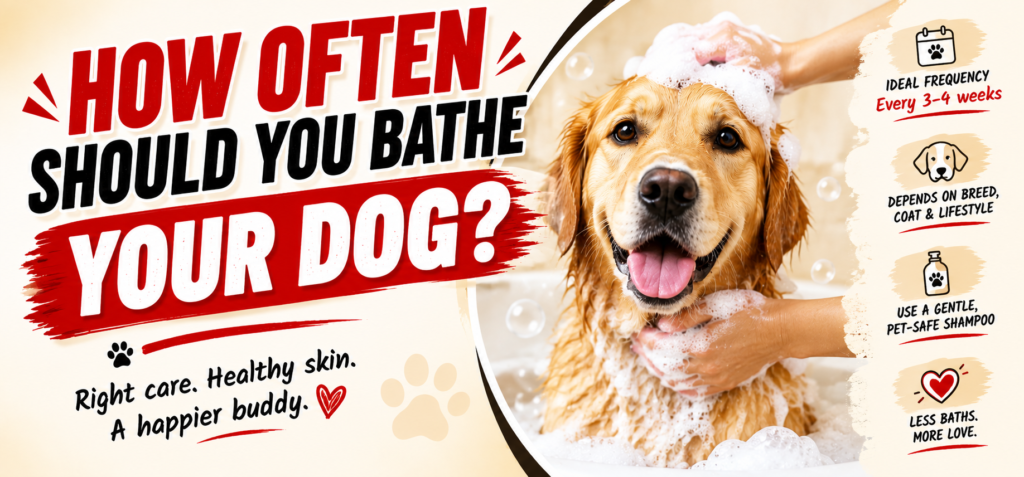
Most dogs do well with a bath every four to six weeks, though this varies by coat type, activity level, and skin condition. Over-bathing, even with dog shampoo, can dry out the skin.
No. Like shampoo, conditioner is pH-balanced for human hair and often contains fragrances or silicones that aren’t meant to be licked off a coat. Use a dog-specific conditioner if your dog’s coat needs extra moisture.
Watch for excessive scratching, redness, flaking, hair loss, or a strong odor a day or two after bathing. If symptoms persist, a vet visit is the safest next step.

Krishna is a self-growth creator and entrepreneur documenting her journey of becoming the person she wants to be. She believes in facing fears instead of avoiding them, building better habits and routines, taking responsibility for her life, and enjoying the journey rather than waiting for a “perfect” life. Through her content, she hopes to inspire people to grow in real and practical ways. Her long-term dream is to become a self-growth speaker. Alongside content creation, she is building a pet-product business rooted in her childhood love for animals and the joy of living with pets.